
Every year, on the last Sunday in October, the clocks go back an hour. Most of us get a slightly longer lie-in and think nothing more of it.
But the change brings something else with it. From that weekend on, it gets dark earlier. By mid-November it can be dark before 5pm. For many older people, especially those living with dementia, those long dark evenings can be the hardest part of the day.
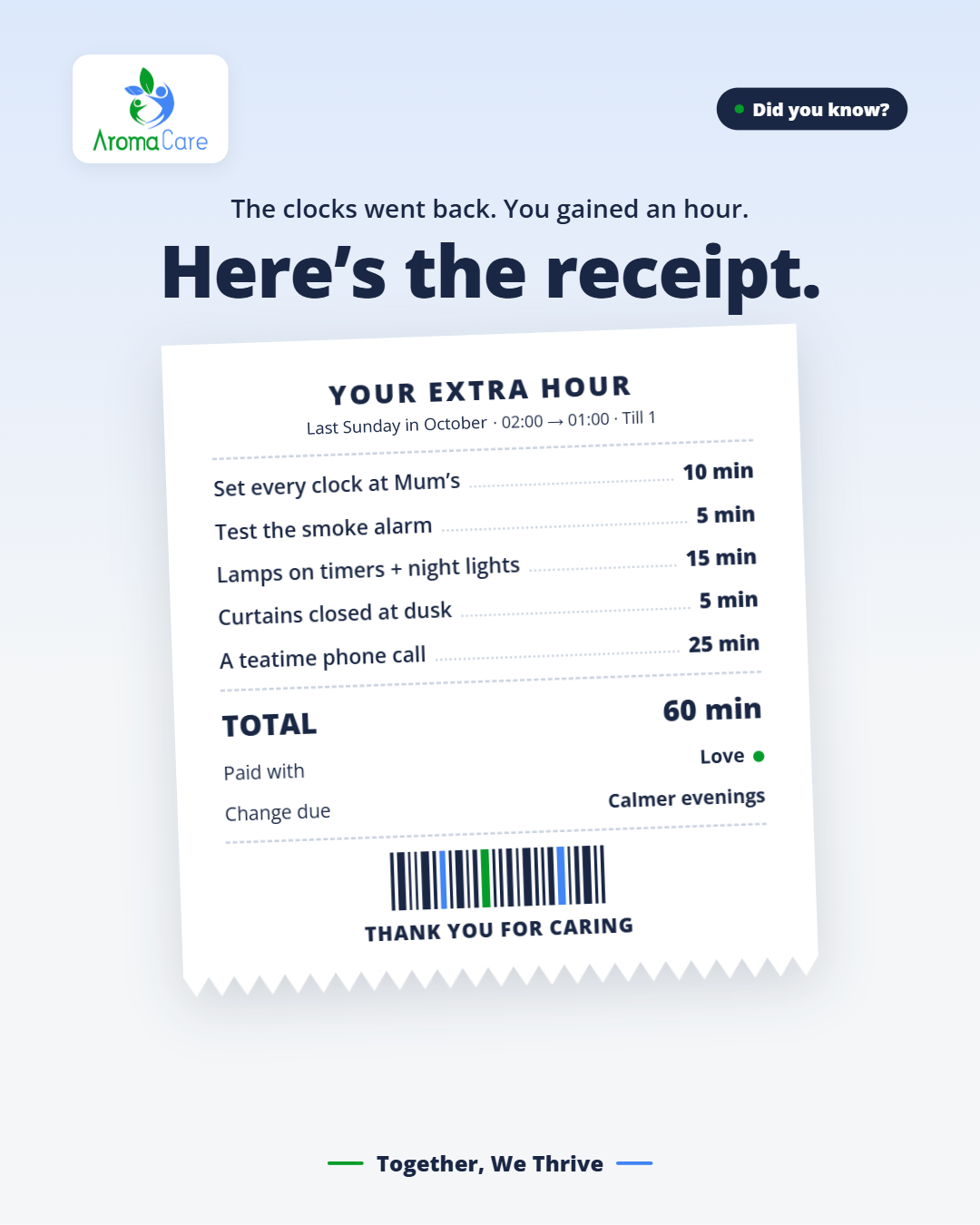
So here’s an idea. Instead of letting the extra hour slip by, spend it on the person you care about. We’ve worked out exactly how. Think of it as a receipt for your extra hour: five small jobs that add up to 60 minutes and can make a real difference to how a loved one feels when the light starts to fade.
Why darker evenings can be harder
Many people living with dementia become more confused, restless or anxious in the late afternoon and early evening. This is often called “sundowning”. It doesn’t happen to everyone and it can look different from one person to the next. Some people pace or want to “go home” even when they are home. Others become tearful, irritable or unsure of where they are.
Nobody knows exactly what causes it, but a few things seem to make it worse. Tiredness at the end of the day is one. Changes in routine are another. Low light plays a big part too. Shadows, dark corners and reflections in windows can be hard to make sense of and they can feel frightening.
When the clocks go back, all of these arrive at once. The light goes earlier, body clocks are thrown out of step and the usual rhythm of the day shifts. That’s why a little preparation in October can go a long way through the winter.
If you notice a sudden change in how your relative is behaving, it’s worth speaking to their GP. Things like an infection, pain or a reaction to medication can sometimes look like sundowning and are easy to miss.
How to spend your extra hour
10 minutes: set every clock so they all match
Walk round the house and check every clock. That means the kitchen clock, the oven, the microwave, the bedside alarm and any watches. Two clocks showing different times can be really unsettling for someone who already finds time confusing. While you’re at it, think about a large digital clock that shows the day and date as well as the time. Many families find it cuts down on the “what day is it?” worry.
5 minutes: test the smoke alarm
The clocks going back is a handy yearly reminder. Press the test button on every smoke alarm and swap any batteries that are running low.
15 minutes: lamps on timers and night lights
A dark house at 4.30pm can feel cold and unfamiliar. Plug-in timers are cheap and easy to set, so a lamp comes on before it gets dark rather than after. Add a few night lights along the route from the bed to the bathroom. They help with getting up in the night and they lower the risk of a fall. Go for soft, even light and avoid anything that flickers or throws strong shadows.
5 minutes: close the curtains at dusk
Once it’s dark outside, windows turn into mirrors. Some people living with dementia see their own reflection and think a stranger is in the room. Closing the curtains at dusk takes that worry away and makes the room feel warmer and safer. If you can’t be there, ask a neighbour or care worker to make it part of the teatime routine.
25 minutes: a teatime phone call
This is the biggest item on the receipt and the one that matters most. A call at the same time each day gives the evening a shape. Keep it relaxed. Talk about what they had for lunch, a favourite TV programme or a family photo you sent. You don’t need to fill the time with questions. Hearing a familiar voice as it gets dark can be enough to settle someone for the rest of the evening.
Your quick checklist
Screenshot this or print it and stick it on the fridge.
- Every clock in the house shows the same time
- A day and date clock is somewhere easy to see
- Smoke alarms tested
- Lamps on timers to come on before dark
- Night lights from the bedroom to the bathroom
- Curtains closed at dusk, every day
- A teatime phone call booked in at the same time each day
If you're a care worker
Evening visits matter more than ever once the clocks change. A few small habits can help:
- Switch on lamps as soon as you arrive, before the light goes.
- Close the curtains and check the night lights are working before you leave.
- Keep the visit calm and unhurried, with the same routine each time.
- Make a note of any change in mood or behaviour so the rest of the team and the family know.
None of this takes long, but it can be the difference between an anxious evening and a settled one.
When a little extra support might help
Sometimes an hour once a year isn’t enough and that’s OK. Caring for someone living with dementia is a lot, especially if you live a long way away or work full time. It might be time to think about extra help if:
- evenings are regularly difficult or end in distress
- your relative is struggling with meals, medication or getting ready for bed
- you’re worried about falls or safety after dark
- you’re finding it hard to keep up with everything yourself
Our care workers support people at home across Warwickshire, Northamptonshire and Gloucestershire. That can include teatime and evening visits, help with meals and medication, getting ready for bed and simply being a friendly, familiar face as the day winds down. We build each visit around the person’s own routine, so evenings feel calmer and more predictable.
If you’d like to talk about how we could help your family this winter, we’d love to hear from you. Please click the button below to enquire, and a member of our team will get back to you.